Tampilkan postingan dengan label Inch. Tampilkan semua postingan

Jumat, 21 Agustus 2015

AmazonBasics 11.6 Inch Laptop and Tablet Case

AmazonBasics 11.6 Inch Laptop and Tablet Case..
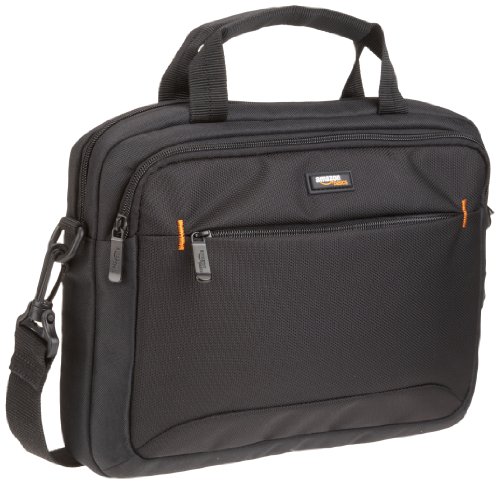

AmazonBasics 11.6 Inch Laptop and Tablet Case

Special Price AmazonBasics 11.6 Inch Laptop and Tablet Case By AmazonBasics

Most helpful customer reviews

218 of 225 people found the following review helpful.
5How Did Amazon Manage to Do Better than the "bag companies" on This One?
By MWebb
Well I am simply surprised. I have 4-5 other netbook cases and this one is significantly better than all of them, for a lower price (a word on pricing later):

* The handles are the right thickness and "feel" - they aren't just webbing that seems like an afterthought and feels uncomfortable, they appear to be made of a thinner Neoprene style material with stitching on the "grab" area to create a nicely-formed, nice-feeling, handle. At first I thought there was a "stiffener" inserted in the handle area to give it more shape and "grippability," but apparently its just a good choice of materials and a well-executed design. You won't need any additional handle wrapper to be comfortable!

- I have another zipper case with a handle but would never feel comfortable carrying it by the handle around town. The handle is too flimsy to be comfortable and I don't trust the security of the construction/stitching. This AmazonBasics case is completely different. I feel like I can have my normal day back and carry this one by hand for quick and easy access on a commuter train or bus.

* The zipper, which runs only across the top and down each side about 2", is robust-looking - it isn't one of those "narrow gauge" flimsy looking zippers (technically, it is a "coil" not a "flat lock" design).

* As another reviewer mentioned, the zipper tabs are large enough to find and operate quickly and easily, and they are a "soft rubber" that feels good to the touch. One minor negative is the large "amazon basics" lettering on the zipper pull. Actually it is beginning to grow on me - yeah baby, I am too cheap (and too smart?) for Belkin or Built! (And got a better designed product.)

* There is NO zipper or "single stitch seam" at the bottom of the bag. Look carefully at some other designs. Make sure that when you send the bag down there is actual padding on the bottom of the bag so the netbook won't "slam" down hard on the table top, floor, etc. Some bags are just Neoprene panels that are sewn together at the seams along the perimeter, and the stitching compresses the Neoprene at the perimeter so it can't do its cushioning job.

- My netbook nestles between the "panel seams" (the bag has two flat side panels, then a perimeter panel to give it width, just like a "normal," larger bag) and rests on normal thickness Neoprene.

* Because the zipper isn't full length on the sides (you only need the zipper across the top, it is plenty wide, for getting the netbook in and out), there is less risk of failing to close the zipper completely and having the device slip out one end.

* The inside of this bag is ORANGE so you can easily make sure you haven't left something inside.

* There is a zippered side-slot on the exterior of the bag which may, in fact, be large enough for a Nook as another reviewer noted. There is ample room for a typical power brick with cord, although that would pretty much ruin the appearance of the bag for carrying, but would be helpful for transiting security (if you have to remove power bricks as well as small computers).

- I checked this side-slot for use with both an external DVD player and with a couple of external hard drives. All fit with room to spare (well, not at the same time!).

- My preferred use for this side slot is to carry memory sticks and an older (3rd gen) iPod Touch. The Touch "boots up" much more quickly than a netbook for quick email and Facebook monitoring.

Recommended modifications/usage adjustments:

- I will put some orange duct tape on one handle so I can keep a better eye on this through airport security (although I try to put my computer bag under my shoes and jacket in the bin through security).

- If I end up not liking the Amazon zipper pulls, it is a simple job to cut them off and replace with lanyard style zipper pulls from REI or other sources. But I think I will keep the stock zipper pulls.

- I will probably find an extra microfiber cloth and roll it up length-wise and lay it down across the entire width of the bottom seam to add extra padding there. It's always handy to have a microfiber cloth around anyway, for wiping the screen on the netbook (not required often) or for wiping my iPod Touch screen (required more often).

- I won't store the power brick in the side slot. I don't like the bulge, not for appearance reasons so much as because it creates a potential pressure point against the netbook side. I will store a DVD player or external hard drive if I decide to carry one (the DVD player is useful for playing DVD's purchased on a trip, the external hard drive is useful if I am taking a low-capacity netbook in which I have installed an SSD - solid state drive - instead of a conventional hard drive).

- I probably won't carry this around like a mini-attache. But the handles are almost indispensable in getting a secure grip on the case when inserting the case and netbook into my daily carry pack or into a laptop slot in carryon luggage. The greatest risk of damage is when we pull the case out of our other bag or put it back in, and handles GREATLY reduce the risk of slipping and dropping during those moments.

- During storage at home, I will separate the battery from the main unit so it doesn't discharge, and the side slot is a perfect place to put it (diagonally).

A WORD ON PRICING: Amazon's prices on EVERYTHING fluctuate like the commodities market. This nice piece is selling for 20% less than when I bought it just last week (10 vs 12). You need to compare prices to other netbook bags an other online and bricks and mortar dealers before you buy so you don't get irate later! (At 12 bucks it was a bargain at 10 it's a steal!)

169 of 180 people found the following review helpful.
5Works great with my iPad.
By Zulma Johnson
UPDATE 12/03/2013: Going on three years and I am still using this bag for now my iPad 3G. No rips or tears. Has a few stains from coffee spills, but that is about it. Love how the side pocket is expandable/stretchable, I can fit all kinds of extra accessories into it. By far the BEST bag out in the market!

This is the perfect iPad carrying case. I already use the official Apple iPad Case that folds over to protect the iPad from daily use, but now I will be able to carry it without worrying it will slip from my hands. I have been searching for a quality made carrying case with handles that would make it easier to carry my iPad from place to place. The AmazonBasics Netbook bag has been the answer. Unlike other iPad carrying cases I have been eyeballing, this Netbook bag is extremely affordable. The rubber grip zippers operate with ease and it is padded for added protection. I can even fit my iPad in it's case inside this bag without having to jam it in, there is plenty of extra room to spare. The side compartment is great to store my portable AC power adapter and digital camera. Great product.

96 of 103 people found the following review helpful.
5Amazingly roomy for such a compact bag!
By Jennifer Ray
Since I bought my netbook, I've been on the hunt for the perfect small case to tote it in. Almost every case I've used has been lacking in some way, but the AmazonBasics Netbook Bag with Handle comes the closest to the perfect case for me of anything I've tried thus far.

Yes, I said it comes the closest, which implies there is something missing, so I'll start with that. It's a pretty minor thing, really, which is why I think the bag still deserves 5 stars. The only thing I would change is I would add a detachable shoulder strap. It's a small detail and one easily remedied by purchasing a universal shoulder strap to it. But if it already had that feature, it would be perfect in my eyes.

Let's move on to what I really appreciate about this case. First and formost, it fits my 10" Asus 1000HE very well while maintaining a small form factor that easily fits inside a larger case. The handles make it easy to pick up and run with when you want to leave the larger case behind and just tote the netbook with you.

On top of that, the zippered side pocket is roomy enough to hold the power adapter for my netbook without `squishing' it. Similar cases have had pockets that were too tight and worried me that they may damage the cable if I stuffed it in them. Not only can I fit the power adapter, but I also keep a Bluetooth mouse in that pocket.

The case has a small bit of padding all around, sufficiently protecting the device with just enough cushion.

If you've been looking for a small netbook bag that can double as a sleeve or an easy-to-tote case on the go, the AmazonBasics Netbook Bag with Handle is for you!

See all 1158 customer reviews...More...


Kamis, 09 April 2015

Seagate Desktop 1 TB Solid State Hybrid Drive SATA 6 GB with NCQ 64 MB Cache 3.5 Inch (ST1000DX001)

Seagate Desktop 1 TB Solid State Hybrid Drive SATA 6 GB with NCQ 64 MB Cache 3.5 Inch (ST1000DX001)..


Seagate Desktop 1 TB Solid State Hybrid Drive SATA 6 GB with NCQ 64 MB Cache 3.5 Inch (ST1000DX001)

Buy Seagate Desktop 1 TB Solid State Hybrid Drive SATA 6 GB with NCQ 64 MB Cache 3.5 Inch (ST1000DX001) By Seagate

Most helpful customer reviews

96 of 105 people found the following review helpful.
5Good compromise between speed and price.
By RJMacReady
Watch Video Here: http://www.amazon.com/review/R2Z1X7ISIZY61A I've been using an SSD as a boot drive on my Windows desktop so I can speak from experience when I say that this drive doesn't really come close to it when it comes to speed. Both are much faster than a standard drive, so the difference is only a matter of seconds, though. And the solid state drive cost nearly as much as this drive but has a fraction of the storage, only enough to hold my operating system and a few of my most frequently used programs. Everything else has to run off a second drive. This drive doesn't cost all that much more than a standard drive for the same storage, and still offers a nice boost in speed.

It works differently than a boot drive, as the computer does not recognize the solid state memory as a second drive, so you don't select which programs or files run off the drive. It only has 8GBs of solid state memory, so it couldn't even hold the operating system. Instead, the drive decides which files to store on the SSD, based on which of them are used most frequently. For that reason, the performance of the drive improves over time, as the drive learns and optimizes how it uses the limited solid state memory.

So far, I'm pleased with the drive. I really haven't noticed any differences between this one and disk based drives I've used, other than an increase in speed. It doesn't complicate things at all - the computer sees it as just another single drive. Having 2TB is nice, as I don't have to worry about space, even with a large collection of HD movies and games stored. Installing it wasn't any more difficult than other drives I've used either. If speed is your top priority, than there is no substitute for an SSD right now, but this is a nice compromise between speed and storage size at a decent price, if you're not worried about your computer taking a few more seconds to boot up.

I've included a short video so you can actually see my PC doing a complete restart. It's pretty fast, but the SSD was even faster.

45 of 51 people found the following review helpful.
5What your iMac needs
By R dattan
Have a mid 2011 iMac with a 3Gbps SATA -500 GB that was running out of space. Plus was getting colored wheels more often inspite of 12GB RAM. SSD at 1TB was half the price of the iMAC which made no sense and the smaller capacity SSD's were ruled out- so this is where the Seagate SSHD 1TB comes in with the right value. The drive is pretty fast and I'm into this for a week only, hence the 4 stars. Amazon's shipping was fast, though the box was not the original Seagate one. Seems like some packaging cost was reduced. Performance wise, the machine feels like a new iMAC straight out of an Apple Store!. Getting this into an iMAC is harder than changing out an MBP HDD and also much harder than a desktop PC. But all said, it is quite doable. Here are the steps- I won't go into too much detail to keep things simple, just follow the links. There may be some differences depending on your iMAC model from 2011, but expect the basic steps to be more or less the same.
Step 1)
Move new SSHD into a USB enclosure. Use clonezilla ([...] to do a disk to disk back up.

Step 2)
As a clone, the new SSHD disk is partitioned exactly like the old disk- which means 500GB is left out- Use Disk Utility to expand the SSHD into 1TB.

Step 3)
Follow this Youtube link to see how to add a new disk to the iMac. You will need the suction for the glass( I used 2 old car GPS holder suction cups to do the job) and Torx T8 drivers ( Home Depot or Lowes). You need to stop at the part where the display and cables come off fully- everything that follows is not required if you are simply swapping out your current disk with a new SSHD
[...]

Step 4)
In the top- middle section you will find the HDD attached with 2 screws. Take off those screws and the 2 cables that connect the HDD. At the bottom, you will find 2 screws sticking out -these are used to hold the HDD to the frame- Use the Torx driver to take them off. Put them back on into the new SSHD. Plug the cables into the new SSHD and put the 2 screws back on

Step 5)
Reverse all the steps, starting with each of the cable connectors as showed in the video. Once everything is back on, power up the iMAC

Step 6)
Depending on your model, you may run into an issue, where the thermal sensor for the HDD may not be detected- this results in the fan running off course and eventually going for full speed ( normal is 1100 rpm- full - 6000 rpm+). This is loud enough and if left running may meltdown the HDD fan. This problem could be fixed with Apple's SMC reset procedure ([...] Use SMC fan control freeware to check fan speeds ([...]

Step 7)
After following Apple's process, if you still observe high fan speeds buy the HDD Fan control app to fix the problem ( there is a 1 hr fully functioning demo, so that you can see it working ([...] At $35 it is a bit pricey but worth it- set it to startup at login, and set it to start in every user's login and you are good to go.

That's it. Seagate drives are generally good and I think this guy will last. I have a momentus 750G SSHD running on the MBP for the last 1 year with no issues. Anyways no more colored wheels spinning and that makes a huge difference

Nov 13th- Update
-------------------------------------------
- Well over a month now- Drive runs well and is quiet -raising my 4 to 5 stars

33 of 40 people found the following review helpful.
5Decent upgrade from 3 year old Barracuda 7200.11
By Timothy D. Williams
I purchased this drive after having great experience with the Momentus XT 500GB (first-gen) notebook SSHD over the last two years. The drive made a great improvement in boot, hibernation and application performance in my Lenovo Thinkpad X120e when an SSD at 500GB capacity would have cost nearly 10x as much as the 500GB SSHD in 2011. I decided to "preorder" this drive over a month ago and it arrived exactly when Amazon promised (late September.)

Upon opening the drive, it looks like a normal hard drive. I mounted it below my original drive that would eventually be pulled, and temporarily plugged it in to the SATA and power cable that my DVD-ROM drive was connected too. I decided to load Seagate's free data migration software (Acronis) which is used by many other OEM's such as Intel for their SSD's. Acronis software has always worked great for me in the past as isn't based on Linux (it appears to be Windows PE) like many "cheaper" migration tools that are often unable to copy Windows GPT partitions or hidden recovery partitions. Acronis data migration in my experience also supports most USB 3.0 and eSATA controllers if you are using an external means to migrate data (such as in a laptop.) I tested it's compatibility with my Texas Instruments USB 3.0 controller and my Marvell eSATA controller and both detected properly, enabling faster copying than over USB 2.0 in a laptop. In short, Seagate's migration software is excellent.

The migration of 1TB data took about 2.5 hours using internal SATA 3Gbps. After it was finished, I disconnected the old drive, connected the SSHD, and plugged my my optical drive back in.

Windows booted and everything looked fine. Performance wasn't much faster at first, but over the course of a few days there have been noticeable improvements booting Windows, loading iTunes and Chrome, and especially switching user accounts. The performance isn't dramatic, but it's there. Windows 7 performance index went from 5.9 to 7.4. This is an Intel x58 motherboard with a 3Gbps (SATA 2.0, 300MB/sec) controller. Newer systems may have a higher rating, but from what I've read, the single 8GB NAND chip on the Seagate SSHD's is only 2-channel so it's limited to around 190MB/sec. The goal is to offer improved random access performance like an SSD, which it does.

Regarding the "product review" I've been running the drive exactly one week pretty heavily with no issues, so at least my model doesn't appear to be defective. Packaging for shipment was excellent; it arrived in a real hard drive carrier with plastic cradles at each end. SMART diagnostics tools has found no problems. Drive had 2 spin ups and 1 hours of use (all presumably factory final testing.)

Hope this review helps with your decision. It's unfortunate they don't make a 3TB and 4TB model.

See all 229 customer reviews...More...


Kamis, 26 Maret 2015

WD Red 1 TB NAS Hard Drive: 3.5 Inch, SATA III, 64 MB Cache - WD10EFRX

WD Red 1 TB NAS Hard Drive: 3.5 Inch, SATA III, 64 MB Cache - WD10EFRX..


WD Red 1 TB NAS Hard Drive: 3.5 Inch, SATA III, 64 MB Cache - WD10EFRX

Special Price WD Red 1 TB NAS Hard Drive: 3.5 Inch, SATA III, 64 MB Cache - WD10EFRX By Western Digital

Most helpful customer reviews

1001 of 1090 people found the following review helpful.
5Regular consumer drives in RAID are accident waiting to happen
By Gary E. Peterson
Here is a quote from a review at pcper.com

I'm going to let the cat out of the bag right here and now. Everyone's home RAID is likely an accident waiting to happen. If you're using regular consumer drives in a large array, there are some very simple (and likely) scenarios that can cause it to completely fail. I'm guilty of operating under this same false hope - I have an 8-drive array of 3TB WD Caviar Greens in a RAID-5. For those uninitiated, RAID-5 is where one drive worth of capacity is volunteered for use as parity data, which is distributed amongst all drives in the array. This trick allows for no data loss in the case where a single drive fails. The RAID controller can simply figure out the missing data by running the extra parity through the same formula that created it. This is called redundancy, but I propose that it's not.

Since I'm also guilty here with my huge array of Caviar Greens, let me also say that every few weeks I have a batch job that reads *all* data from that array. Why on earth would I need to occasionally and repeatedly read 21TB of data from something that should already be super reliable? Here's the failure scenario for what might happen to me if I didn't:
* Array starts off operating as normal, but drive 3 has a bad sector that cropped up a few months back. This has gone unnoticed because the bad sector was part of a rarely accessed file.
* During operation, drive 1 encounters a new bad sector.
* Since drive 1 is a consumer drive it goes into a retry loop, repeatedly attempting to read and correct the bad sector.
* The RAID controller exceeds its timeout threshold waiting on drive 1 and marks it offline.
* Array is now in degraded status with drive 1 marked as failed.
* User replaces drive 1. RAID controller initiates rebuild using parity data from the other drives.
* During rebuild, RAID controller encounters the bad sector on drive 3.
* Since drive 3 is a consumer drive it goes into a retry loop, repeatedly attempting to read and correct the bad sector.
* The RAID controller exceeds its timeout threshold waiting on drive 3 and marks it offline.
* Rebuild fails.

At this point the way forward varies from controller to controller, but the long and short of it is that the data is at extreme risk of loss. There are ways to get it all back (most likely without that one bad sector on drive 3), but none of them are particularly easy. Now you may be asking yourself how enterprises run huge RAIDs and don't see this sort of problem? The answer is Time Limited Error Recovery - where the hard drive assumes it is part of an array, assumes there is redundancy, and is not afraid to quickly tell the host controller that it just can't complete the current I/O request.

Here's how that scenario would have played out if the drives implemented some form of TLER:
* Array starts off operating as normal, but drive 3 has developed a bad sector several weeks ago. This went unnoticed because the bad sector was part of a rarely accessed file.
* During operation, drive 1 encounters a new bad sector.
* Drive 1 makes a few read attempts and then reports a CRC error to the RAID controller.
* The RAID controller maps out the bad sector, locating it elsewhere on the drive. The missing sector is rebuilt using parity data from the other drives in the array.
*Array continues normal operation, with the error added to its event log.

The above scenario is what would play out with an Areca RAID controller (I've verified this personally). Other controllers may behave differently. A controller unable to do a bad sector remap might have just marked drive 1 as bad, but the key is that the rebuild would be much less likely to fail as drive 3 would not drop completely offline once the controller ran into the additional bad sector. The moral of this story is that typical consumer grade drives have data error timeouts that are far longer than the drive offline timeout of typical RAID controllers, and without some form of TLER, two bad sectors (totaling 1024 bytes) is all that's required to put multiple terabytes of data in grave danger.

The Solution:
The solution should be simple - just get some drives with TLER. The problem is that until now those were prohibitively expensive. Enterprise drives have all sorts of added features like accelerometers and pressure sensors to compensate for sliding in and out of a server rack while operating, as well as dealing with rapid pressure changes that take place when the server room door opens and the forced air circulation takes a quick detour. Those features just aren't needed in that home NAS sitting on your bookshelf. What *is* needed is a WD Caviar Green that has TLER, and Western Digital delivers that in their new Red drives.

End quote and back to reviewer.
I've got 5 of these in a Synology DiskStation 5-Bay (Diskless) Network Attached Storage (DS1512+). It is really a sweet setup.

The Synology software has a S.M.A.R.T. test that can do surface scans to detect bad sectors. I have their Quick Test check every disk daily and the Extended Test set to automatically run on each of the 5 disks every weekend. (The Extended Test takes about 5 hours per disk so I separate the tests by 12 hours.)

96 of 104 people found the following review helpful.
4Nice hard drives for NAS or storage server with RAID.
By T. Mccleary
If you're looking at this review, you're probably in the market for some honkin' big drives to stuff into a server or a NAS box. These Western Digital "Red" series drives are probably a total waste of money if you're planning to put them into a regular PC. If you're not doing a raid array of some kind, then save your money and buy the green or black series drives instead. If you're looking to set up a raid array of some sort, these are a bargain. They aren't the fastest drives, but they are rated to run 24x7 serving up data! Their 3 year warranty is above the current industry standard for consumer hard drives.

For my home-made FreeNAS (google it!) NAS/Server, I bought 5 WD Red drives from Adorama (purchased through Amazon) and 1 drive directly from Amazon.

The one drive from Amazon came very well packaged, double boxed in what looks like a WD cardboard box with a shock absorbing cradle. Very well packaged for shipment. Honestly, Amazon has been stellar for packaging boxes for shipment.

The 5 hard drives from Adorama came in a big box which 'clunked' when it was tilted. Opening the box revealed some big plastic pillow air strips, and 5 loose smaller boxes. Inside each of the smaller boxes was a few pillows and a factory bagged hard drive. There were not enough pillows in each box to securely cushion the hard drives against rattling around, so there's a high likelihood of damage in shipment. BAD SHIPPERS! NO DONUT!

Anyway, getting on to the performance of the drives... I'm running 6 drives in a ZFS RaidZ2 array. They are all controlled using an IBM M1015 PCIE 8x SATA 3 controller which has been flashed to be an HBA providing JBOD to the ZFS OS. That's a lotta acronyms! The speed of the array is quite fast... more than fast enough to saturate a gigabit network. I currently have about 5TB of data stored on the 10TB array.

On to the bad stuff...
One of the drives (I haven't checked the serial number to see which shipper it came from) is starting to give signs of premature failure after about 70 hours of operation. During a scrub of the data pool, drive DA5 is experiencing unreadable sectors. Luckily ZFS is able to calculate the correct values for the corrupted data, and is busily recreating the data onto another part of the drive. ZFS rocks for data reliability! If the drive does turn out to be bad, I have a WD Green 3TB drive that I can put into the array as a hot swap temporarily until the failed drive can be replaced. *UPDATE* The ZFS scrub just finished, and it repaired 1.53MB of data, with no data loss. Did I mention that ZFS rocks?

Warning/Advice about Data Storage:
Note 1: If you're going to be using these drives, or any data storage device for that matter, make sure that you take into account that these are highly fragile and delicate devices which can be easily damaged in shipment, or just plain up and fail when you least expect it. You really need to use some sort of redundant array of drives so that if one drive fails, your data doesn't vanish. In my case, the final configuration is going to be 6 drives in a RaidZ2 (dual parity striping), which means that my data stays intact and accessible even if 2 drives fail simultaneously. Also, there is going to be a 3TB Green drive as a hot spare that can take over for any failed drive in the array. With the hot-spare, my data can survive the loss of 3 drives without losing data (as long as the failures don't happen all at the same time).
Note 2: Always, always, always have a backup. In my case, I have two external 3TB USB3.0 drives which will be used only for backup purposes. Every so often, I'll backup the critical data onto the drives and stash them in my locker at work. If you don't have TrueCrypt, google it and see why your backup removable drives should be using it. If someone steals the drives, they only get the drives and not my data.

I'm giving 5 stars for the drives that work... 1 star for the failing drive... averages to about 4 stars score! I'll update this review once I have details on how the drives do in a week or so. Currently it ain't looking too good for drive DA5!

139 of 160 people found the following review helpful.
5NAS Best Friend
By Simon
After about six months of searching for the perfect drive, I finally settled on two of these Western Digital Red 2TB WD20EFRX hard drives. I was ready to purchase HGST enterprise drives, the former Hitachi, but WD came out with these drives just in-time. I wanted to get the 3TB WD30EFRX version for my Synology DS212 NAS, but the price difference didn't make that much of a sense, and 2TB drives are more than enough for a few years of my home office use. I am very happy that these drives MTBFs are rated at 1,000,000 hours, they use less power, and they are cheaper than other enterprise drives.

Upon receiving, I immediately installed them in my NAS. It took about 15 minutes to install DSM 4 and begin the inspection process. I neither chose Raid 1, JBOD, or SHR, and I took some online advice and created two separate volumes, one on each disk, to have two independent file systems. In this case, you don't have to worry about rebuilding disk arrays if any drives fail, and you always have a backup present. I was planning on using Folder Sync feature to sync all folders from Disk 1 to Disk 2 every other hour, but I found out this feature only works on two independent Synology Disk Stations; however, you can use automated backup feature to backup data from Disk 1 into Disk 2, and it produces about the same result as Folder Sync does, and it gives you a few more options for backing up system and application files as well.

Synology volume creation took about 7 hours for each drive with automatic bad sector reallocation feature. I later tested each drive with S.M.A.R.T extended test--each took about 4 hours--and I am happy to report that I did not have any bad sectors on either of the drives. That is, the "Reallocated Sector Count" reads zero in S.M.A.R.T report.

The drives are surprisingly quiet. I had an enterprise RE2 500GB in my NAS, and it was thunderstorm loud compared to these. The temperature is also very reasonable. When the drive is resting it is about 31C/88F, and under heavy usage it rises up to 35C/95F. Although these drives speed are only 5000 rpm, I don't see any difference in file transfer speed. The only downside that I could sense was the startup time from sleep. I feel that compared to my old WD RE2 drive, it takes a good 2 to 5 seconds more for the NAS to come out of sleep each time. Not a deal breaker, but something to consider when you invest in these drives.

I think WD has done a good job with these drives, and they are currently the best on the market for home or home office use. That being said, I still think WD RE4 drives are the best enterprise drives and ultimate in performance; however, if you are looking for a good set of drives for your NAS, and the power consumption and noise are important to you, these WD Red drives will work just fine. Compared to desktop drives, these come with a few enterprise features that come in handy and will save you some time and money down the road.

See all 1055 customer reviews...More...


Kamis, 05 Maret 2015

Pioneer AVH-X2600BT 2-DIN Multimedia DVD Receiver with 6.1 Inch WVGA Touch Screen Display

Pioneer AVH-X2600BT 2-DIN Multimedia DVD Receiver with 6.1 Inch WVGA Touch Screen Display..


Pioneer AVH-X2600BT 2-DIN Multimedia DVD Receiver with 6.1 Inch WVGA Touch Screen Display

Buy Pioneer AVH-X2600BT 2-DIN Multimedia DVD Receiver with 6.1 Inch WVGA Touch Screen Display By Pioneer

Most helpful customer reviews

9 of 10 people found the following review helpful.
4Great overall
By Brandon J Preddy
Overall, this is a great unit. Touchscreen works well and it's pretty easy to figure out. I like the Blutooth option and the search functionality works well too. My only complaint is there doesn't seem to be any built in way to get GPS navigation on it. The only way I've been able to find is to spend a few hundred dollars more for an add on system.

5 of 6 people found the following review helpful.
5Fast Shipping and great product.
By Robert Hall
The radio is only about two days old and I am very impressed with how easy it was to install everything. The radio sync'd right up with my Iphone 5 and started playing my music off of my Iphone right away.

Sound quality is better than my old factory unit.

I have tested the bluetooth and the only issue is that it sounds like the person is on speaker phone but the quality is good.

I will update if I have any issues with this unit.

To date I highly recommend this unit to anyone.

2 of 2 people found the following review helpful.
3Good Deck with Many Options
By Matthew Hunt
I wasn't expecting it to have a conversation with me for the price, but I was expecting quality. And quality is what I received.

Pro's:
Easy to use
Easy to setup
Looks Good
Many color choices
Fast, functional touch screen
Good Sound quality

Con's:
Matte Display is hard to see in Sun - This is a big one, and I have dark tinted windows (18% front/8% rear) and I can barely see it when it's sunny out.
Backgrounds are lame, and without many color choices.
No Options to Dim lighting for night time use.

Overview: For $250 shipped, It's worth it, but you won't see what you're doing in the sunlight.

See all 60 customer reviews...More...


Selasa, 03 Maret 2015

Avery Easy Peel White Mailing Labels for Laser Printers, 1 x 2.62 Inch, Box of 3000 Labels (5160)

Avery Easy Peel White Mailing Labels for Laser Printers, 1 x 2.62 Inch, Box of 3000 Labels (5160)..


Avery Easy Peel White Mailing Labels for Laser Printers, 1 x 2.62 Inch, Box of 3000 Labels (5160)

Special Price Avery Easy Peel White Mailing Labels for Laser Printers, 1 x 2.62 Inch, Box of 3000 Labels (5160) By Avery

Most helpful customer reviews

15 of 16 people found the following review helpful.
5A ery Mailing Labels
By D. DiPietro
They're labels! They work, they stick, no problem printing on them, they went through the printer without any jams, in short, they're exactly what you'd expect them to be.

11 of 12 people found the following review helpful.
4Avery Laser Labels -- Always Dependable
By Debbie Lee Wesselmann
I've been using Avery 5160 return address labels for years, so I was interested in how the "Easy Peel" differed from the older ones I still had. When I took the first sheet out of the box, I was immediately concerned about the weight of the backing; the sheets seemed much flimsier than those I had remaining in my old box, a choice obviously made in the interest of the pop-up edges. Once I printed a sheet of both and compared the labels themselves, they seemed comparable. However, a couple of issues emerged: it was slightly more difficult to manually insert a sheet of the Easy Peel so that the labels lined up correctly because the sheets were more likely to bow, and printed labels stored in a file folder were more likely to catch and come off when pulled in and out. Despite this, these labels maintain the Avery quality the company has been known for, and they stick well and completely to envelopes. Note: these labels are for laser printers, not for inkjets.

The Easy Peel feature is only marginally better than the old style, which I never found difficult to remove. Here, you fold the sheet along each row, and a small portion of the labels' ends pop up. It definitely can save time if you're doing a lot of mailing/labeling; however, most people won't care. I appreciated the feed arrows since I always forget which end should be up when feeding manually. I printed ten sheets out of the box, in rapid succession, and other than the lining up issue noted above, every sheet came out smoothly and perfectly printed.

Although Microsoft Word has the necessary template for these labels in its project gallery, buyers can also get the correct template at the Avery website (address supplied on the box).

I've used several different brands of mailing labels, and I always come back to Avery. Despite the lighter backing of these labels to enable the "Easy Peel," the labels themselves maintain the same high quality. I just wish the ease of removal could be combined with a slightly heavier/stiffer backing. Five stars for the label quality, three stars for the Easy Peel design.

-- Debbie Lee Wesselmann

7 of 9 people found the following review helpful.
5Labels Make Life Easier
By Andrea
I love labels, or anything that makes life easier. I am very organized, both at work and at home. Labels make things so much more convenient and quicker.

I love these labels. They don't necessarily have to be used with a printer - they can be written on. And the reason I say this, is because these labels are for Laser Printers, and I have ink jet printers. Therefore, I can still use these, because I can write on them rather than running them through the printer.

There are a variety of uses for labels. In addition to addresses, files, and other office reasons, they can be used for jars, boxes, etc.

Awesome product.

See all 177 customer reviews...More...